Force, Friction and Fun
I’ve watched children barrel down that slide in seventeen different experimental ways—sideways, belly‑down, backwards, double‑deckered. Nothing unusual.
Then one child went flying down at cartoon speed, hair straight back, pure joy on her face, and I muttered to myself, “Whoa, gravity is working overtime today.”
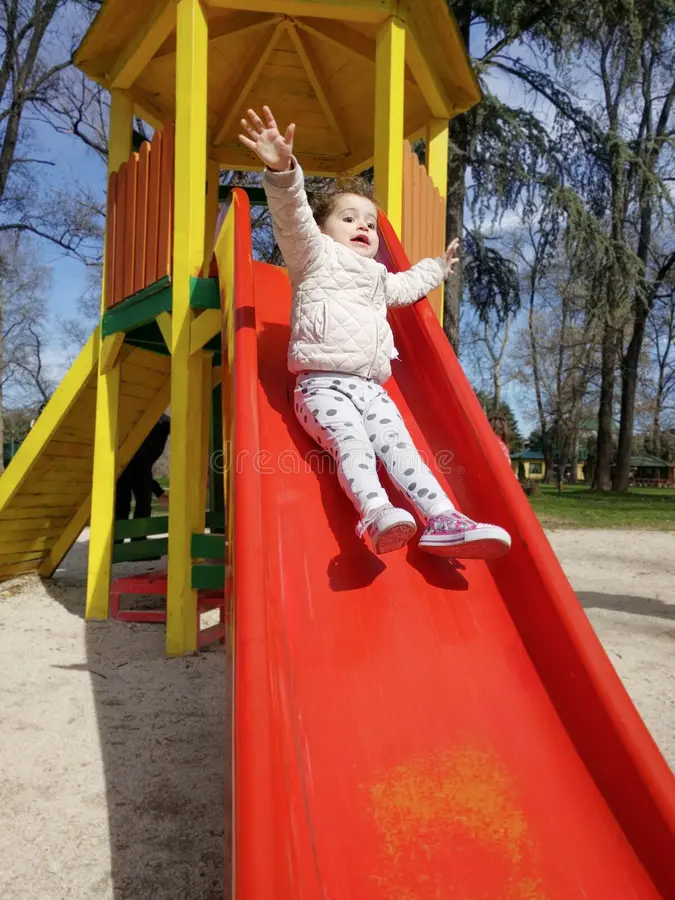
That was the moment. It felt like someone tapped me on the shoulder and whispered, You know you can actually teach these words, right? They’re literally happening every five seconds out here.
It sounds ridiculous even saying it now. I’ve been watching children play for years—balancing on stumps, pushing swings, rolling logs, throwing balls, climbing, sliding, jumping off things with questionable wisdom. And yet I had never thought to introduce the actual scientific vocabulary living inside all those perfect little moments.
It wasn’t a grand teaching revelation. It was more like finally finding the reading glasses that had been sitting on top of my head the whole time. Suddenly everything just clicked into focus.
Maybe I assumed the words were too big. Maybe I figured the kids were too young. Or maybe I just didn’t want to become that teacher who casually drops “centripetal force” during recess. Who knows?
What I didn’t do was gather the children in a circle and announce, “Boys and girls, today we will be learning new science words.” That’s not my style, and honestly, they would’ve wandered off in sixteen seconds, if I had tried. Instead, I slipped the words into the moments that were already happening—natural language sprinkled into natural play.
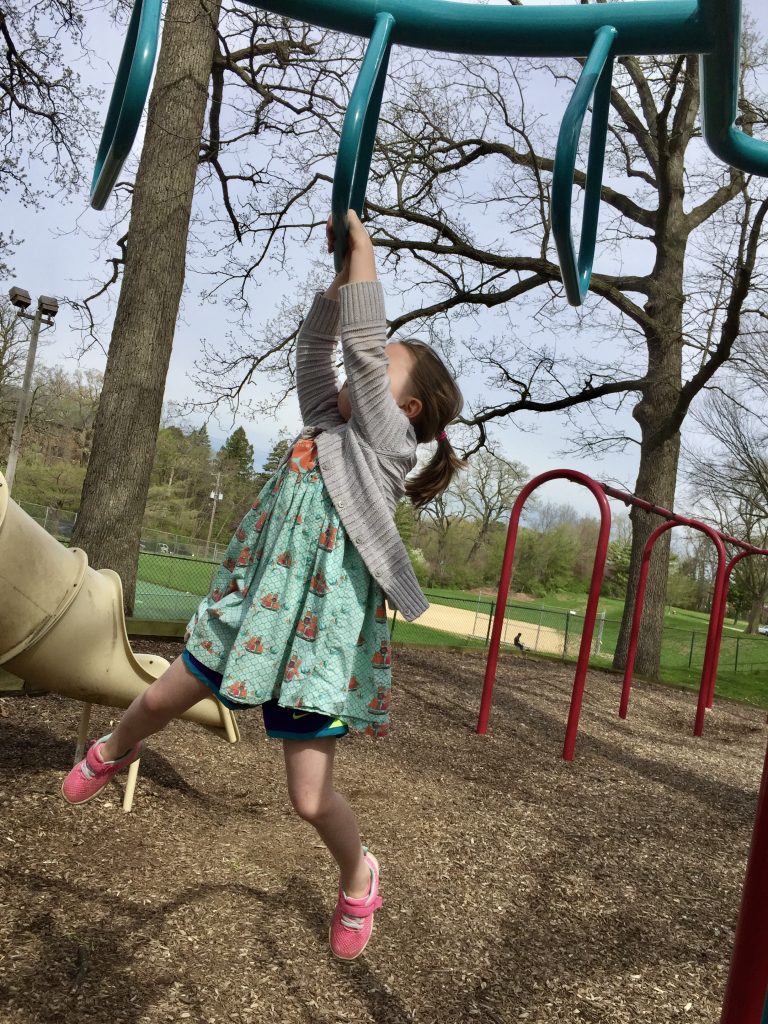
And the wild thing? The kids didn’t even blink. They accepted the vocabulary instantly, as if it had always belonged on the playground. One child told another, “You need more force if you want to roll that log.” I swear, I almost retired on the spot. Such a simple shift, and yet it changed the way I saw my own teaching.
The next time I saw a line of children balancing on stumps along the edge of the playground, I put my newfound superpower to work. Some ran boldly, like circus performers, while others tested each step with careful concentration. Every wobble, every shift in weight, every tiny misstep was a lesson in balance and gravity. They were learning physics with their bodies long before they had the words for it. I offered a gentle narration: “Look at how gravity keeps you grounded as you wobble!”—hoping they’d begin to link the word to the sensation.
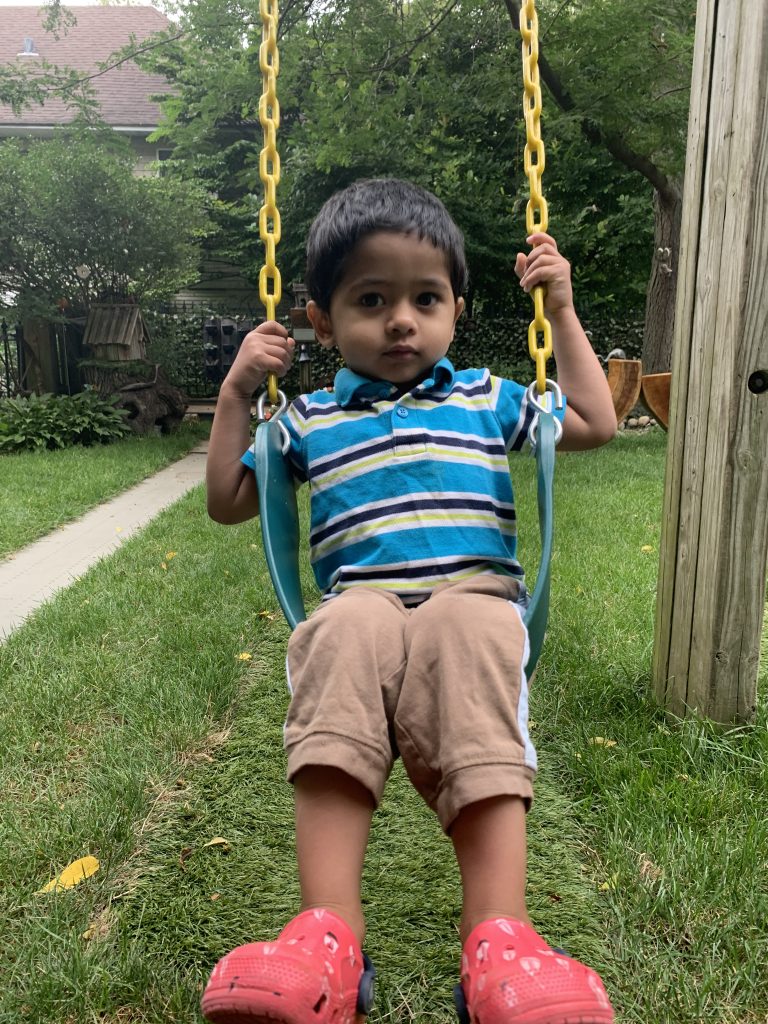
The swings offered daily opportunities, too. A friend gives a push, and the swing shoots forward. “Wow, that was a strong push! Force at work,” I’d say. At the top, it slows, then falls again. “Gravity is helping you come down!” Some children lean back or kick off the ground, experimenting with how hard to push and how high to go—force and gravity, all happening naturally, all waiting for a name. And then, in a burst of pure joy, one child jumped off midair, arms wide, shouting, “Gravity!” as they sailed through the air before landing safely. No charts, no lectures—just words dropped into motion.
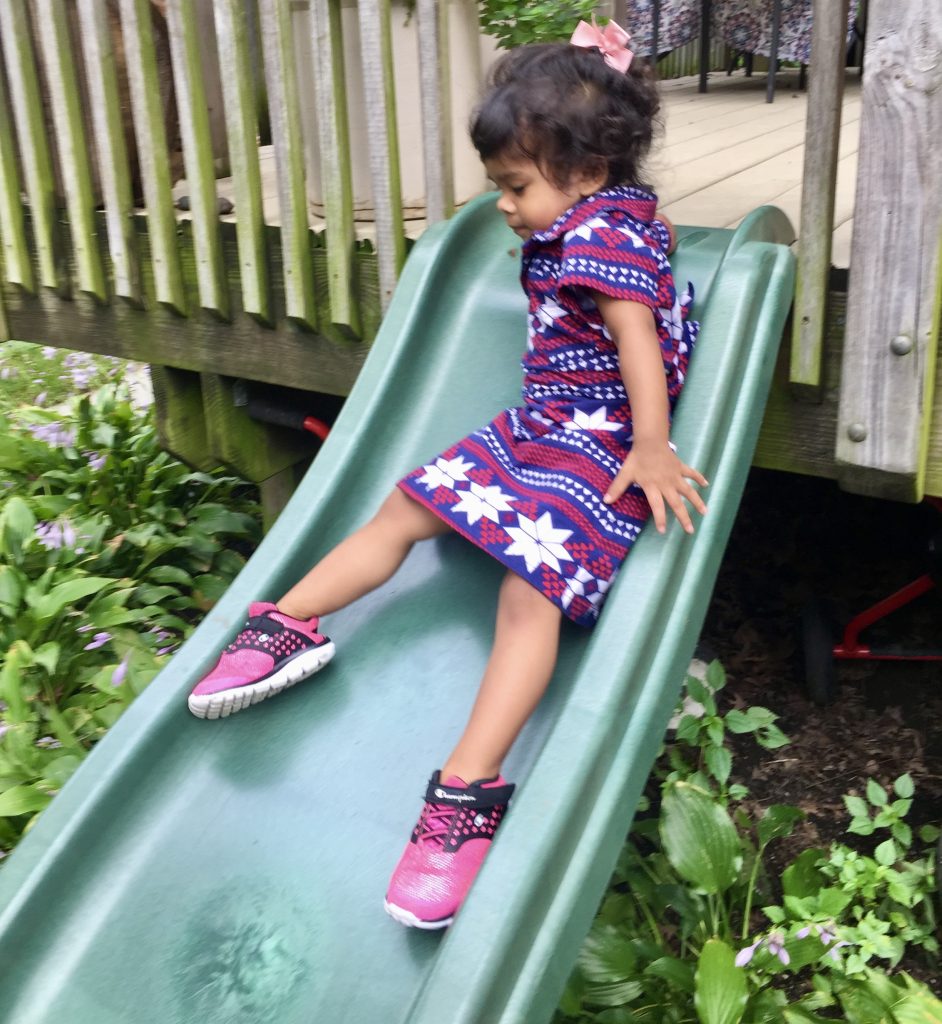
The vocabulary drops continued up the slide. Children climbing up a slick surface, sliding down feet‑first, or barreling down in a slippery jacket—these are perfect moments to talk about friction without ever pausing the fun. Smooth clothing means faster slides. Wet jeans? More friction, more slow‑motion drama. They feel it first, then slowly attach understanding to the word.
You don’t need a perfect setup to use big vocabulary in small moments. You don’t need a special lab or a “science day” on the schedule. If you have ten minutes on a playground, a short walk, or a breezy moment after lunch, the science is already there. The words are already waiting. Kids are already doing the experiments. You don’t even have to build a lesson plan—you just have to notice and name what’s happening.
That tiny shift—choosing to narrate the science already unfolding around us—made our days richer without adding a single extra task to my plate. I didn’t change my teaching. I just changed the words I allowed myself to use. Children are always doing science. We’re simply giving them the language for what their bodies already understand.
very good options
I didn’t know so many everyday things can incorporate so much science
Thank you for more inspiration to teach science to my young students.
I can teach the children about gravity on the playground with the monkey bars and slide.
The children will love to learn about force and gravity. The children will be asking me a lot of questions about the force and gravity.
I can use all the child science projects that afe safe and child friendly.