A Child’s First Science Lab
When people hear the words early science, they usually picture young learners in goggles, standing around a table while an adult pours vinegar into a baking-soda volcano. That can be fun, but it’s also a little silly if you think about it. Children don’t learn science by standing back and watching. They learn it by doing, experimenting, asking questions, and playing their way into new discoveries.
Every puddle splash, melting icicle, every moment with a tape measure is an opportunity to explore, observe, and figure things out. Science is already happening in a child’s everyday play. They are already scientists—we just need to notice it.
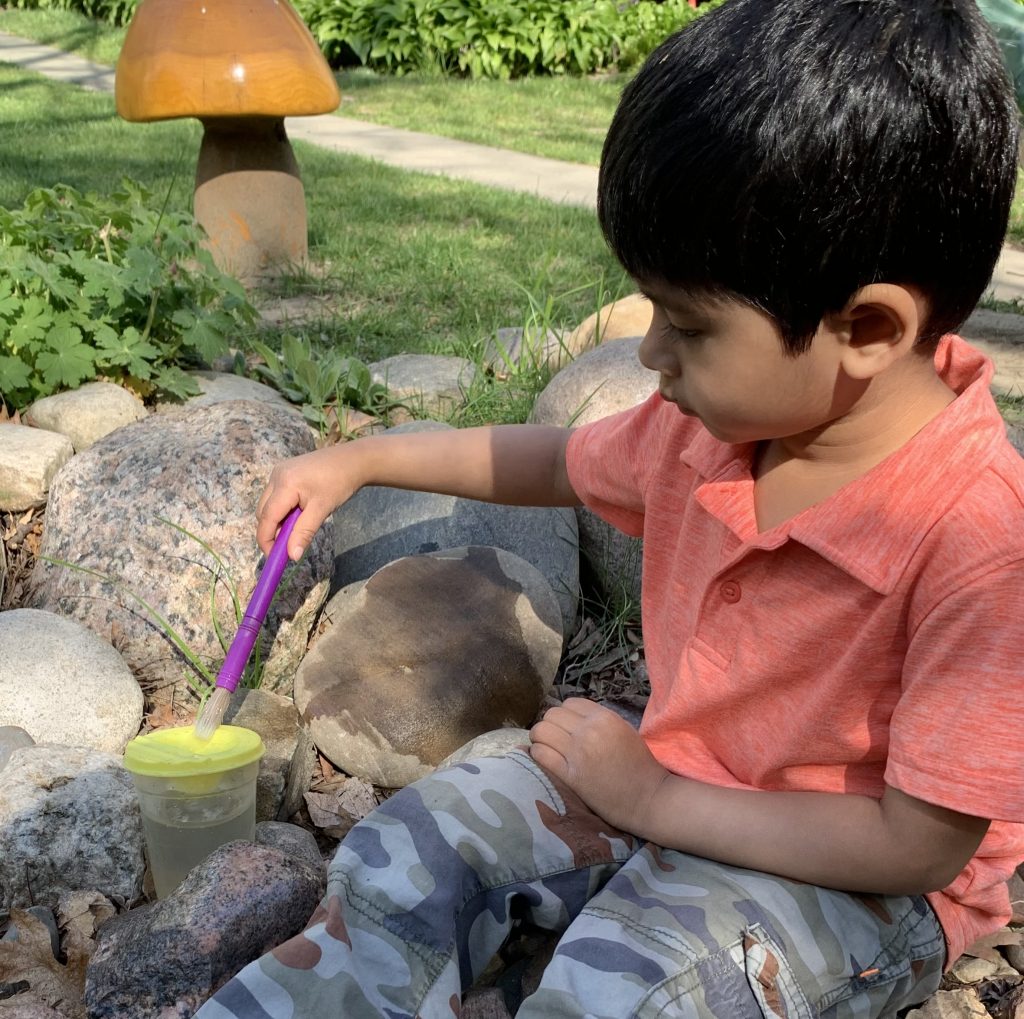
As Zayd sits in the rain garden with a cup of water and a paintbrush, he’s busy swirling the dirty brush into the clean water because it’s fun to see the water get cloudy. Then he notices how the water changes the colors of different rocks as he “paints” them. He experiments, watches what happens, and adjusts. That’s science. He’s learning cause and effect, testing different materials, and noticing patterns, all without anyone handing him a worksheet or telling him what to do.
Discussions about the weather can often feel rote and boring in early childhood classrooms. Kids are asked to check a calendar or look out a window and report, “It’s snowing outside,” but that doesn’t really connect them to the experience. Hands-on exploration is a whole different story.
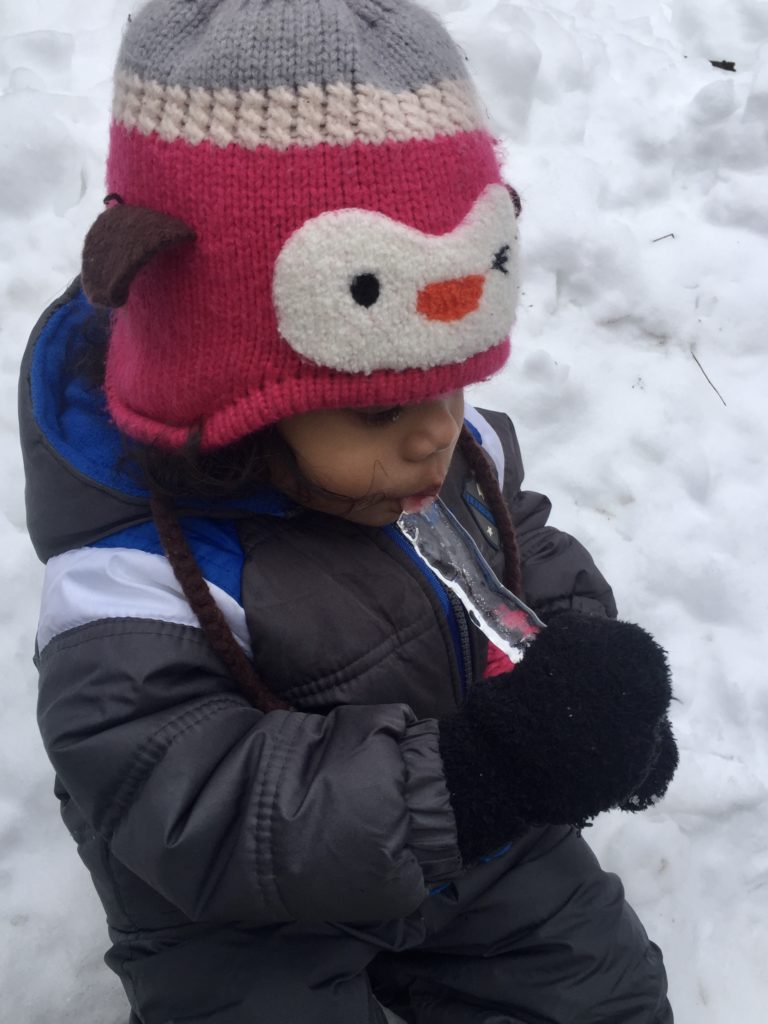
On this brisk winter morning, nature has given us the gift of icicles. Three-year-old Saaliha hesitates at first, eyeing the frozen spikes her friends are happily sucking on, but curiosity wins. She picks one up and brings it to her mouth.
Letting children experience the weather directly creates rich, hands-on learning opportunities. Saaliha isn’t just “reporting” that it’s cold; she’s discovering what cold, melting, and change feel like. These small sensory moments are where science, measurement, and observation really come alive. Kids don’t need big science experiments in front of them. They’re already engaging with the world, testing, learning, and building the foundations of scientific thinking.

This is exactly why we’re so excited about the new activities we’ve just added to our sister site, Ready Child. Ready Child is all about the magic of simple play. It gives families and teachers easy, meaningful ideas they can use right away. Through play, children learn patience, independence, social skills, and communication. They also grow stronger bodies that can sit, balance, use tools, and focus. These are the skills every child needs before they can join more structured learning.
Early Science Matters picks up from there. It looks at the play children are already doing and gently extends the learning in fun, hands-on ways. Together, Ready Child and Early Science Matters create a smooth path from curiosity and play to deeper scientific thinking, confidence, and problem-solving. The activities look playful on the outside, but inside each one is a chance for a child to practice observation, experimentation, and problem-solving—skills they’ll use later when STEM challenges get bigger.
In Ready Child activities like Paint With Water, children experiment with how water spreads, changes color, and disappears. In Winter Wonderland, they cook up snow muffins, follow animal tracks, and measure sledding differences. Inch by Inch introduces measurement and comparison, letting children explore size, distance, and patterns in a playful, hands-on way. Each activity is simple, but it encourages the same kinds of thinking scientists use every day.
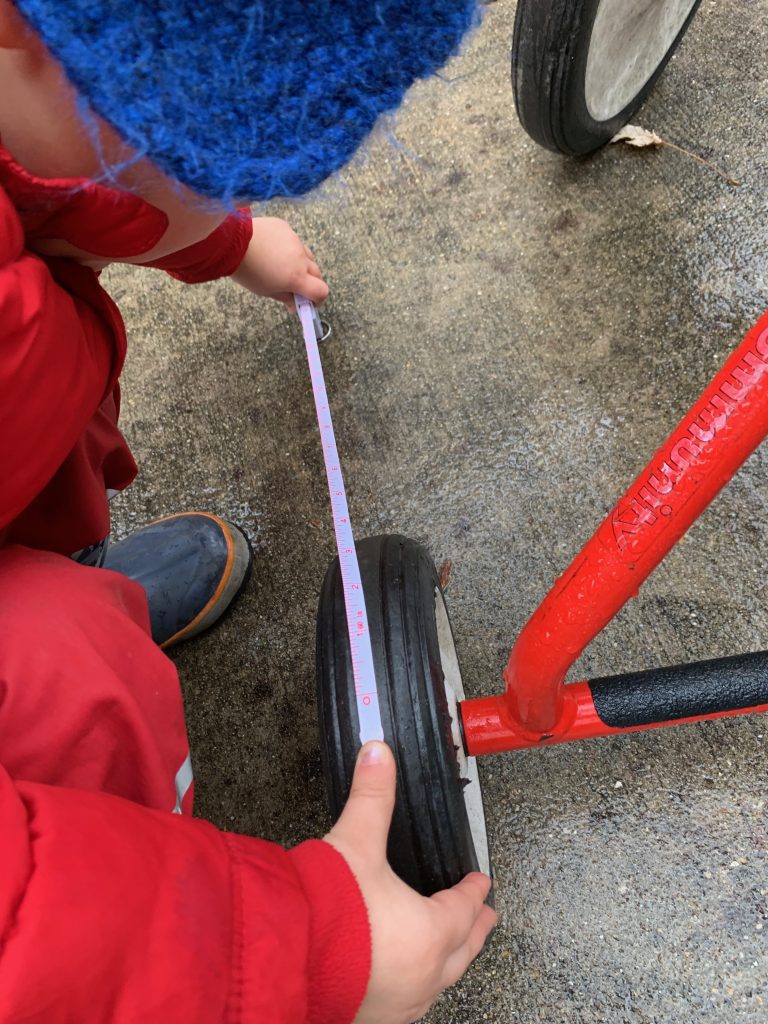
Children grow into scientific thinkers through hundreds of small, playful moments. They watch, touch, test, compare, and try again. Each experience builds confidence, curiosity, and problem-solving skills. They don’t realize it, but these moments are laying the groundwork for future science learning.
Connecting Ready Child with Early Science Matters helps parents and educators see and support these moments. Together, they give children the first chapter of their science curriculum—a chapter that starts in playful exploration and naturally leads to deeper thinking. Adults don’t need to orchestrate complicated experiments or schedule formal lessons. They just need to notice what children are already doing and encourage them to go a little further.
When we support curiosity early, we’re not just preparing children for future science experiments—we’re helping them explore the world. We don’t need goggles, baking soda, or a show. We just need their curiosity, their hands, their minds, and enough time to explore. We can’t rush it, and we shouldn’t try. Real learning happens in the moments they choose to play, explore, and experiment for themselves.
Love it!
Seems like of a lot of fun. The child could draw what they see
Seems very interesting for a child to do
Children can slowly start to understand the differences