Spatial Reasoning In STEM Play
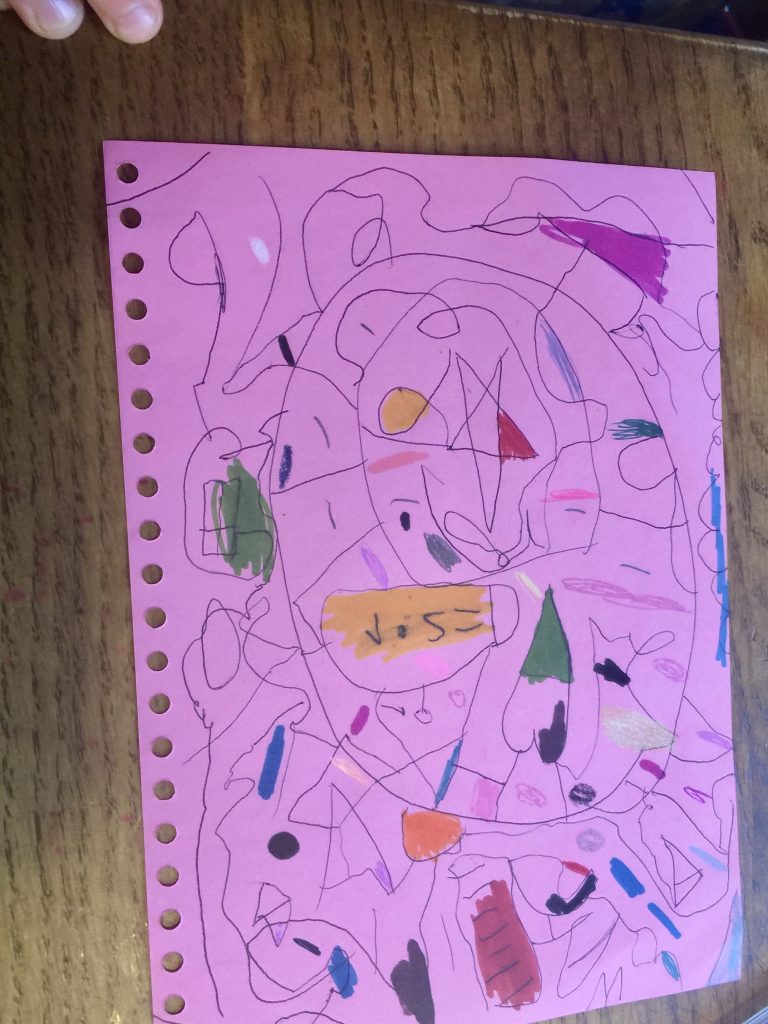
“I made the path that Sam follows when he sneaks out of the house,” says three-year-old Michaela. “Remember how Sam does all those turns?”
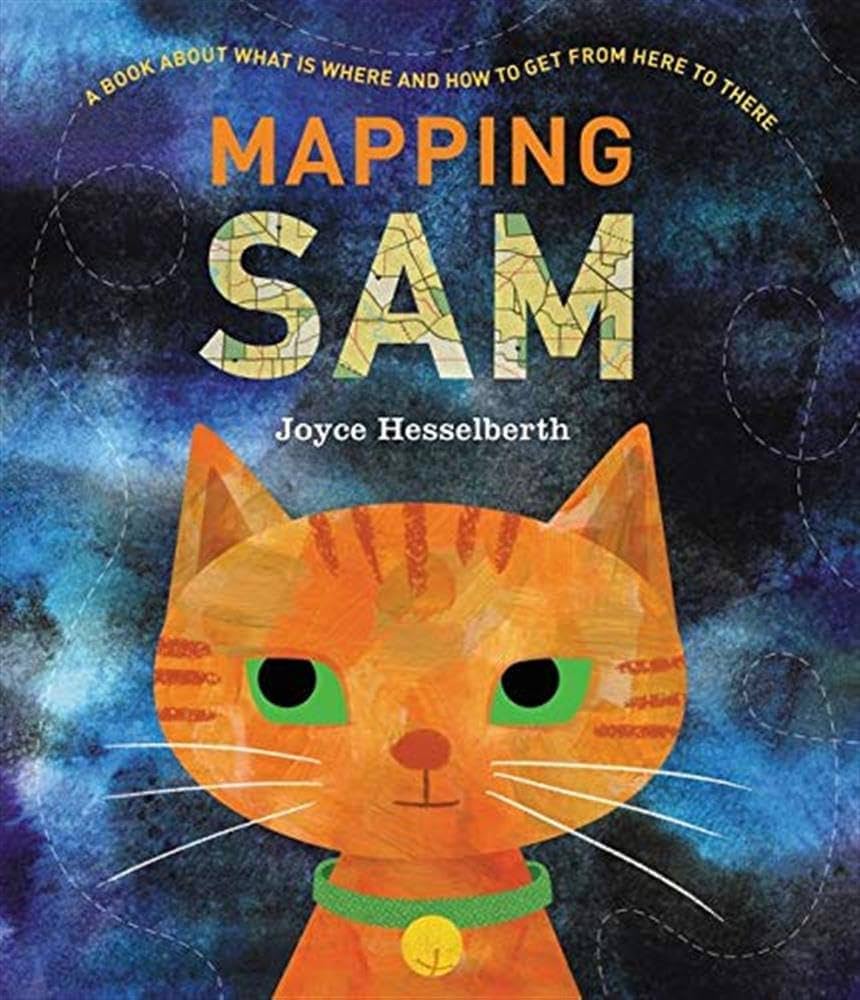
In Mapping Sam by Joyce Hesselberth, readers follow the nighttime adventures of Sam the cat as she explores her neighborhood. Each page introduces a new kind of map—street maps, body maps, weather maps, even blueprints. Ever since this book appeared on our shelves, Michaela has been captivated. She traces Sam’s journey with her finger, predicts where Sam might go next, and checks her guesses with each turn of the page.
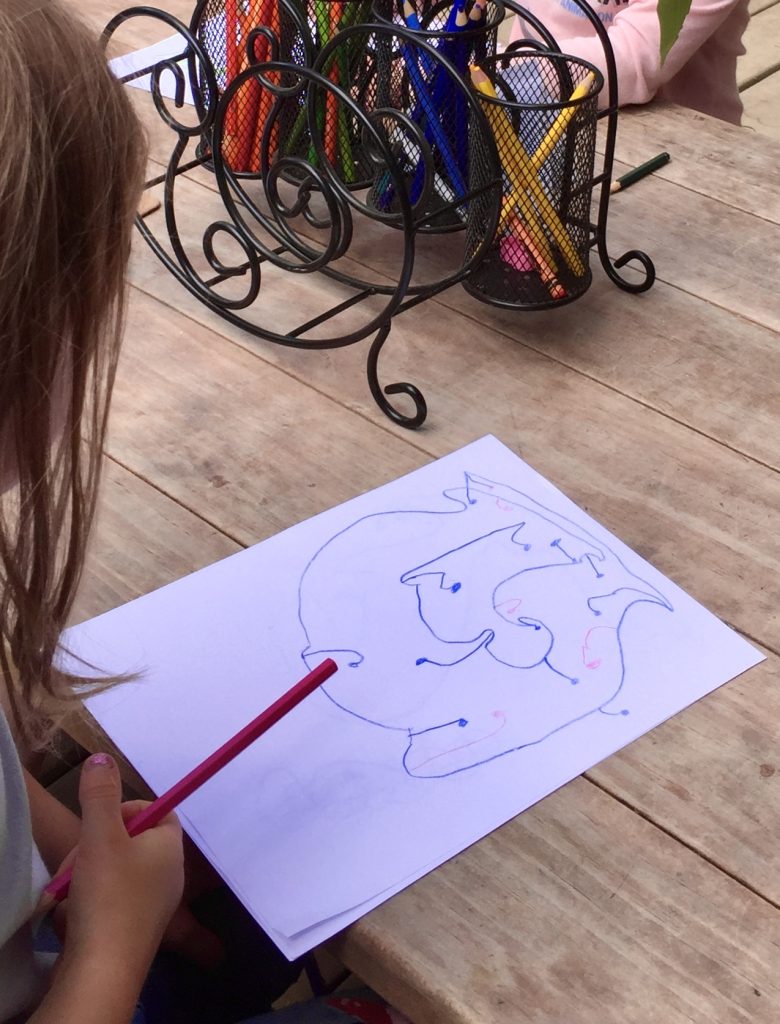
Today, Michaela isn’t just reading the story—she’s extending it. On a small sheet of paper, she’s drawn her own version of Sam’s path. Her lines twist and loop, and make us dizzy! Her drawing skills are still emerging, but her spatial reasoning—the ability to imagine where things are and how they connect—is remarkable.
Spatial reasoning is the secret sauce of STEM learning. When children figure out how a puzzle piece fits, imagine which block will stack, or mentally rotate an object to see if it fits in a space, they’re using powerful mental muscles. Researchers call this “mental rotation,” and it’s one of the strongest early predictors of later success in fields like physics, architecture, and engineering. It’s not just about knowing where things are—it’s about imagining what could be.
As Michaela explains her map to her friends, the complexity of her thinking shines through. She’s not simply copying a story; she’s modeling her understanding of how places connect. “Sam goes here, then here,” she says, moving her finger across the page. “And this is where she hides.” Every line holds meaning. Every landmark represents a decision. Her map is both story and science—a visual model of her thinking.
Children come wired with curiosity. From the moment they start crawling, they’re testing ideas, building theories, and gathering data about the world around them. At the heart of this exploration is spatial thinking—the brain’s built-in GPS. It helps children understand where they are in relation to objects and people, and how things fit together. But it’s more than navigation; it’s how children learn to organize, imagine, and problem-solve.
When a child makes a map, they’re doing what scientists, engineers, and designers do every day. They observe, interpret, and represent. They decide what’s important to them! Mapping becomes a gateway to STEM thinking—an early exercise in modeling, measurement, sequencing, and communication.
Before a child can draw a map, they first must observe their surroundings. They notice patterns: the big tree near the swing set, the turn in the path near the sandbox. They decide how to represent those features—perhaps a circle for the tree or a square for the sandbox. That process is what scientists do when recording data or what engineers do when sketching blueprints. A child’s map becomes their own recorded data of how they see and understand their world.
Following a path on a map strengthens memory and sequencing, learning to follow steps, anticipate what comes next, and understand cause and effect. These are the same abilities they’ll use later in coding, mathematical reasoning, and scientific experimentation.
When they draw a map of their classroom or playground, they’re also learning to take a three-dimensional world and turn it into a two-dimensional image—a key step toward understanding graphs, diagrams, and abstract representations.
And of course, mapping invites collaboration and language development. When Michaela shares her drawing with friends, she’s sharing her ideas. Her friends ask questions and begin to draw their own routes. Together, they compare perspectives and problem-solve. Through this process, they’re learning how to communicate complex spatial information—another essential STEM skill.
A child’s map might look simple, but it’s packed with planning, observation, and discovery. It’s evidence of a brain actively organizing the world—piece by piece, path by path. When we give children time, space, and encouragement to explore mapping, we’re not just supporting art or play—we’re helping them build the mental frameworks that power STEM learning for life.
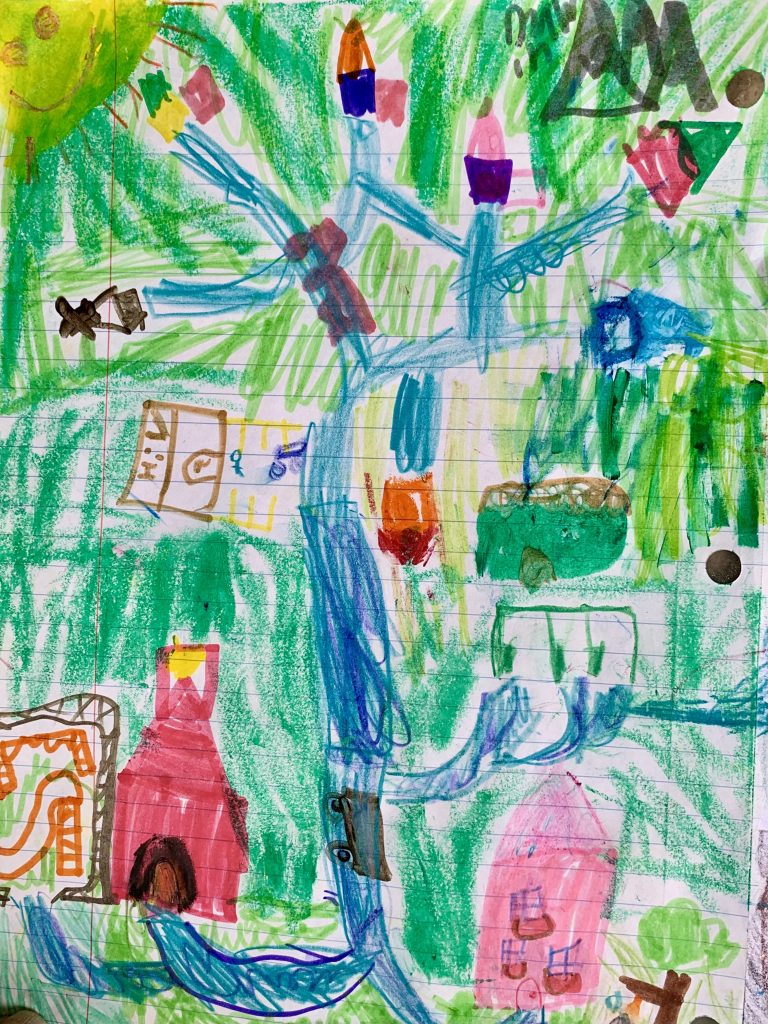
Inspired by Michaela’s enthusiasm, other children soon joined in. They map their backyard, their home, even their favorite playground. Each new map offered a glimpse into how children perceive relationships, distances, and possibilities.
Perhaps the best part of the day was that the learning was led by our youngest child. The child whose fine motor skills are still emerging, the one who’s often on the edges of play. Today, she became the guide. In mapping Sam’s world, she mapped ours too—showing us that curiosity leads the way.
We have Early Science Matters lesson plans to expand your study of maps! Check out Neighborhood Walk and Follow the Trail to Map Reading to map out your day with sunshine and science!